Cybersigilism Tattoo Ideas
Tech-meets-occult aesthetics — circuit-board sigils, digital runes and glitchy sacred geometry merged into one of the fastest-growing tattoo movements on social media. Browse 24 reference designs below, then preview any of them on your own body with the free tattoo simulator.
What Is Cybersigilism?
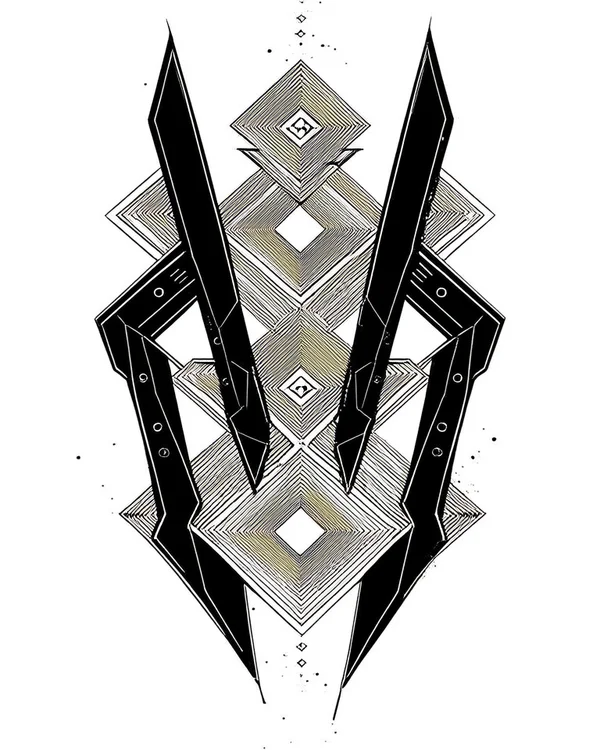
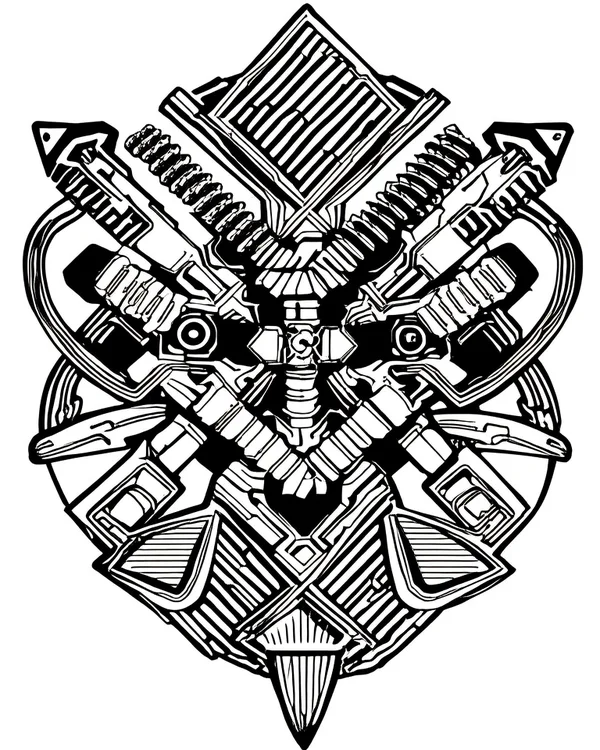
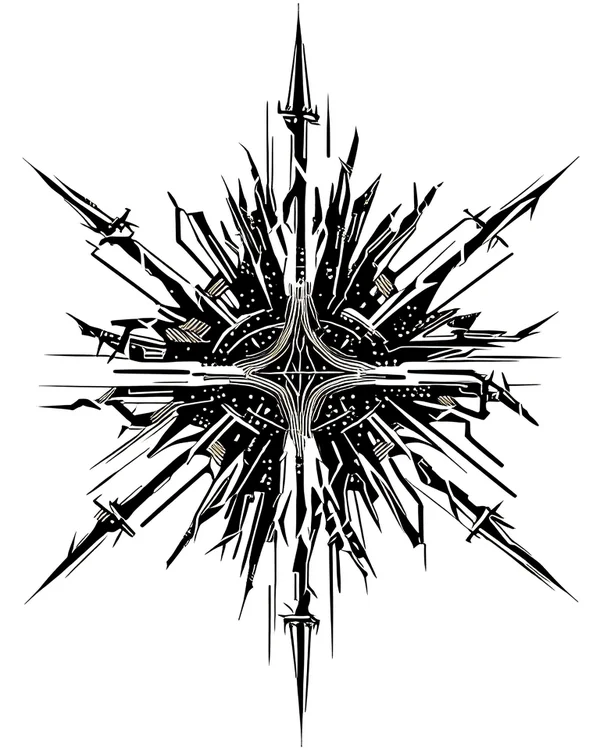
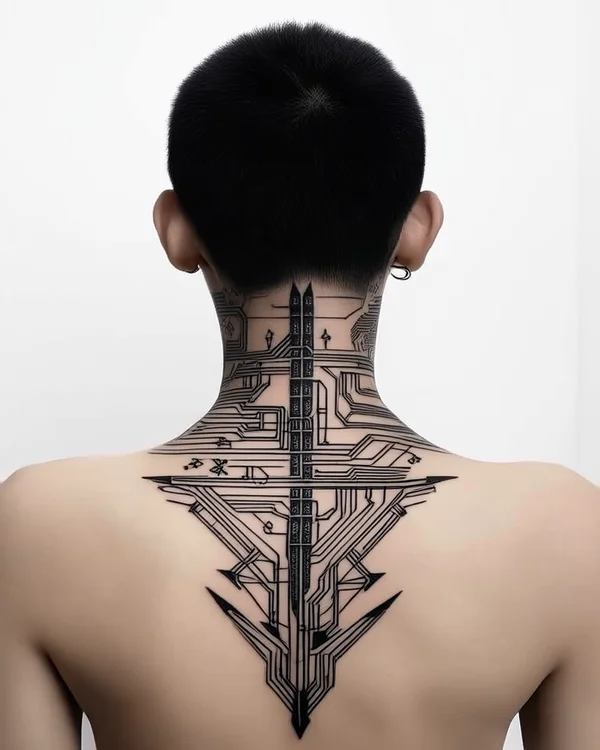
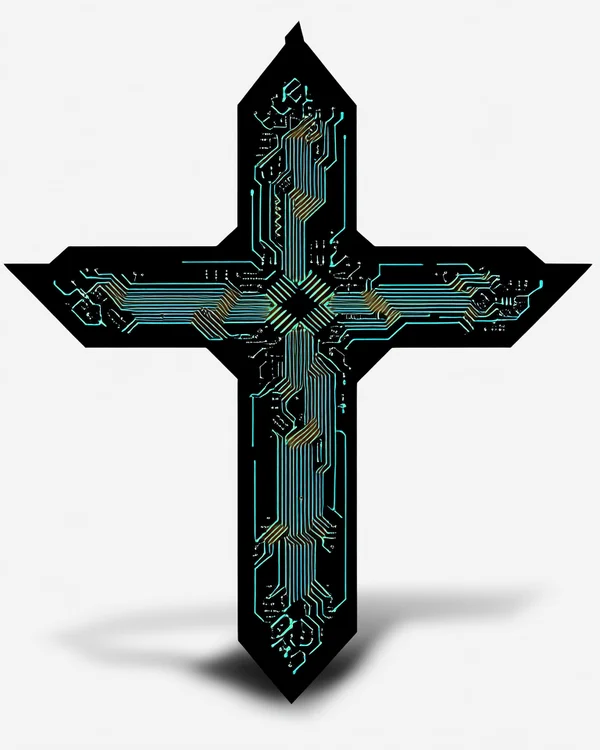
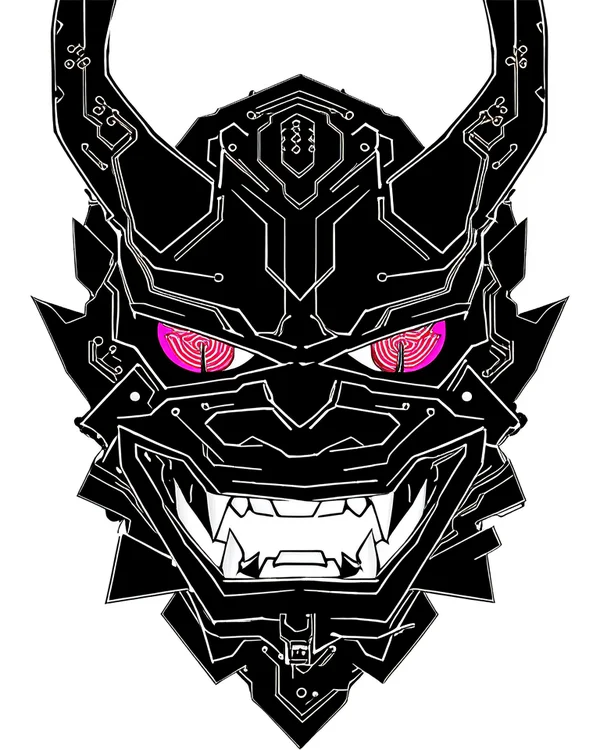
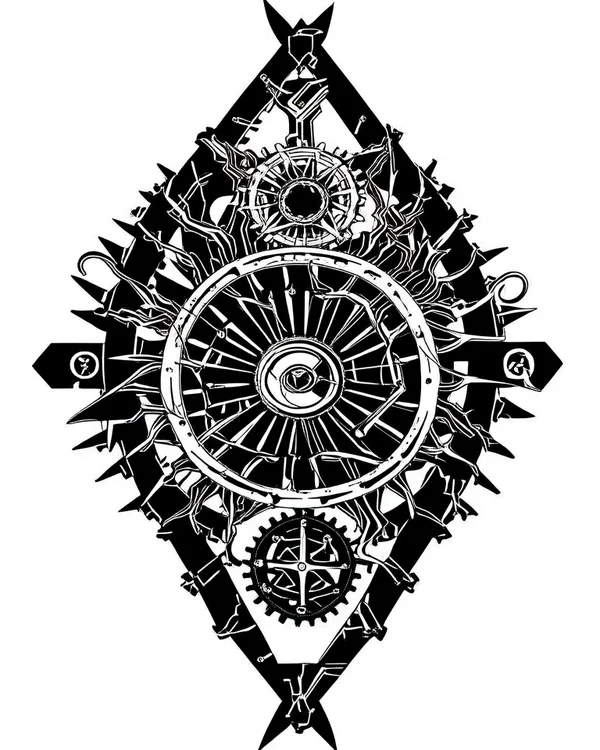
Cybersigilism is a tattoo style that fuses occult symbolism with the visual language of technology. Think circuit-board traces forming pentagram shapes, glitch-art runes that look like corrupted data streams, and sacred geometry rendered with the precision of a CAD program. The style emerged from online art communities in the early 2020s and exploded on Pinterest with over 3,200 percent growth as people searched for designs that felt both ancient and futuristic at the same time.
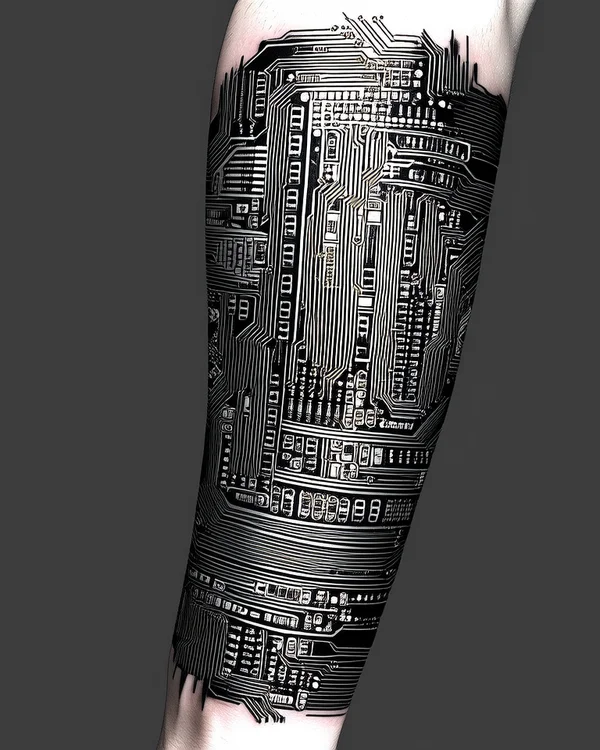
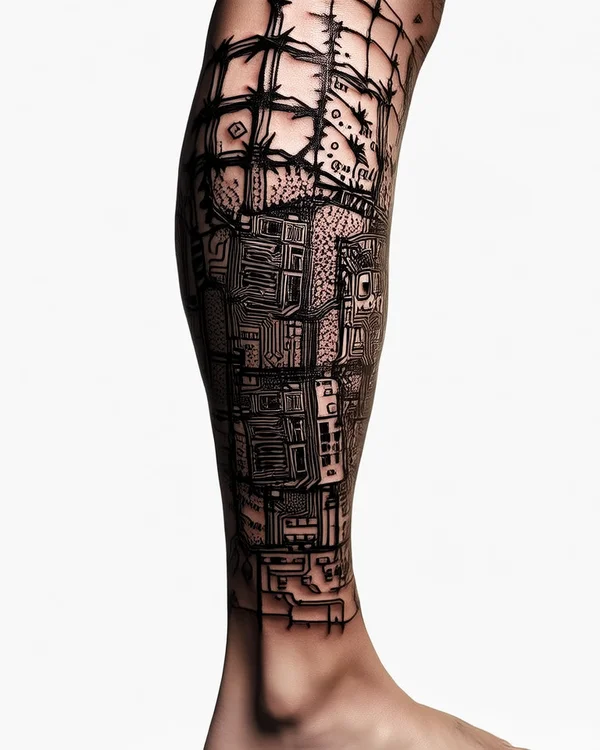
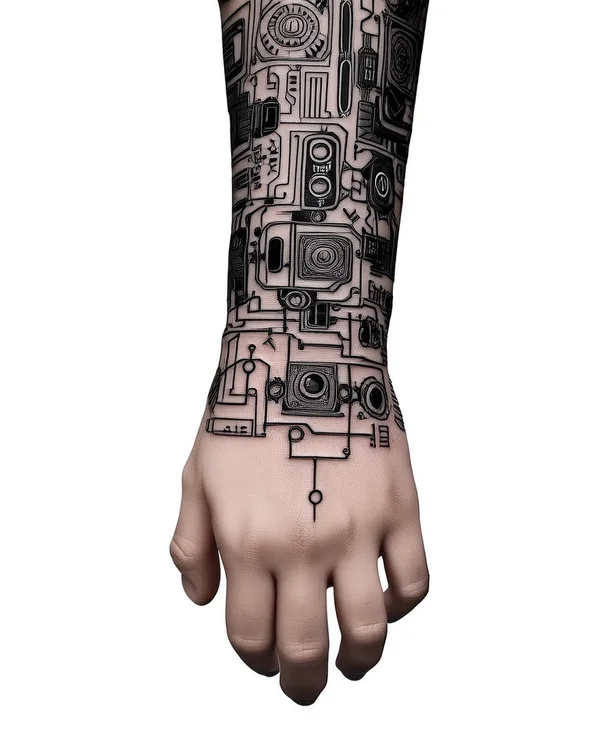
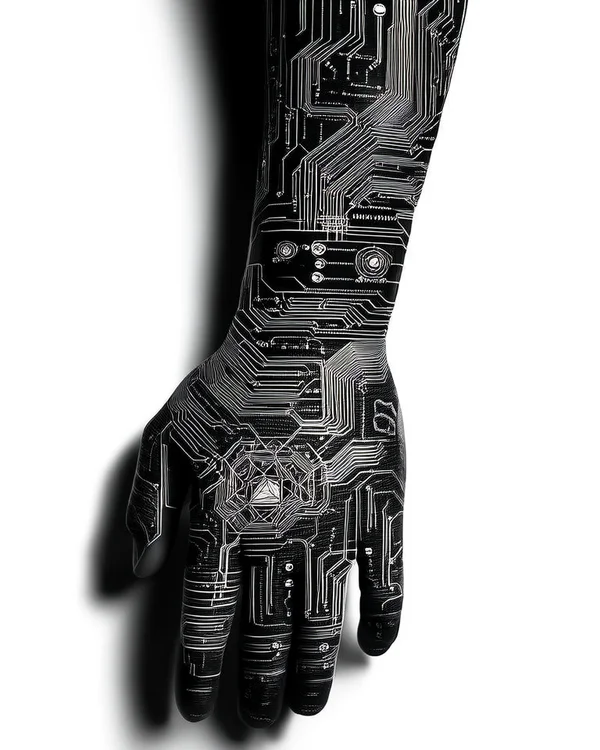
Unlike traditional tribal or occult tattoos, cybersigilism treats the body as a kind of biological motherboard. Lines often branch like printed circuit traces, terminating in dots that resemble solder points or sensor nodes. Symbols borrow from alchemy, Kabbalah and runic alphabets but are redrawn with hard angles, pixelated edges and binary code fragments woven into the composition. The result is a visual language that suggests the wearer is part human, part machine — a living interface between flesh and data.
Origins and Cultural Roots
The roots of cybersigilism stretch in two directions. On one side is the centuries-old practice of sigil magic — creating symbolic marks charged with personal intention. On the other is cyberpunk art, glitch aesthetics and the hacker ethos of repurposing technology in unexpected ways. When tattoo artists started merging these streams, they created something that resonated with a generation raised on screens, streaming and server farms.
Early pioneers posted work on Instagram and TikTok around 2021–2022, often pairing their tattoo flash with lo-fi electronic music and dark, moody lighting. The style spread rapidly through repost chains and mood boards. By 2023, Pinterest reported cybersigilism as one of the top-trending tattoo search terms worldwide, with particular traction among Gen-Z users looking for ink that felt personal, mystical and forward-looking all at once.
Key Visual Characteristics
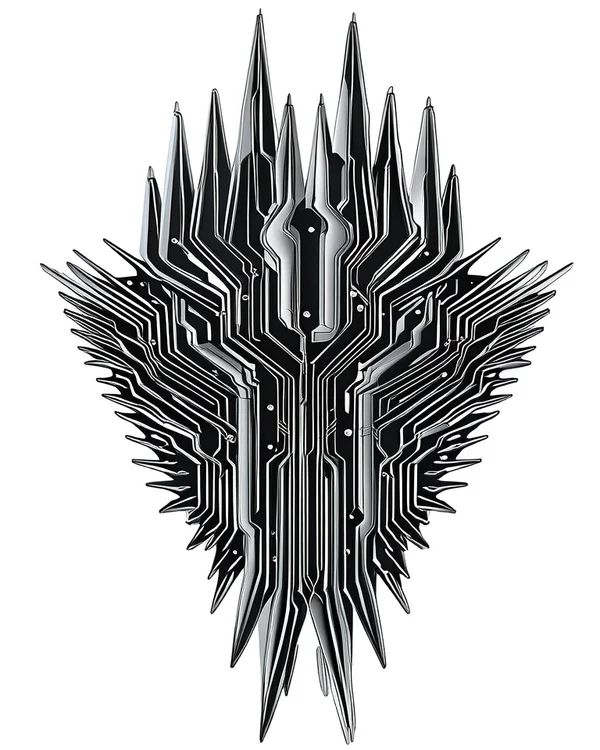
- Circuit-trace linework: Thin, precise lines that branch and reconnect, mimicking the traces on a printed circuit board. These lines often form abstract shapes or outline recognizable symbols.
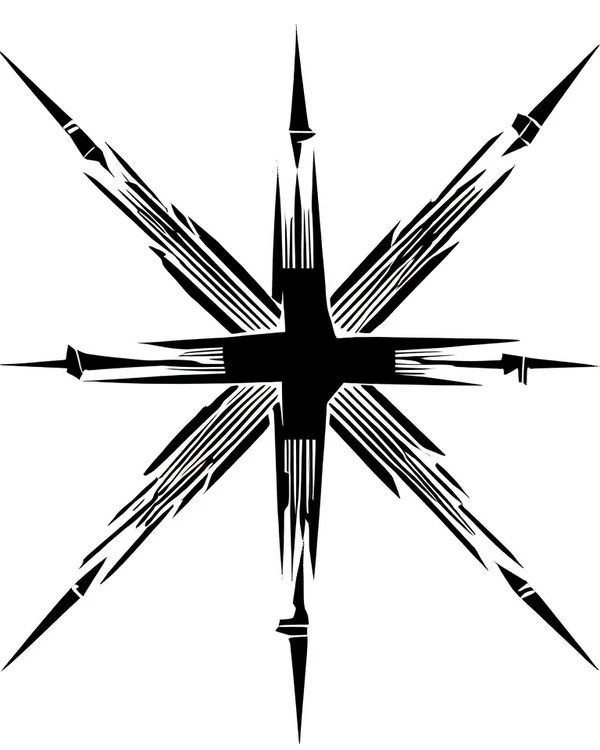
- Digital runes and glyphs: Letters and symbols drawn from runic, alchemical or Kabbalistic traditions, reinterpreted with pixel edges, scan-line distortion or partial corruption as if the data was damaged in transmission.
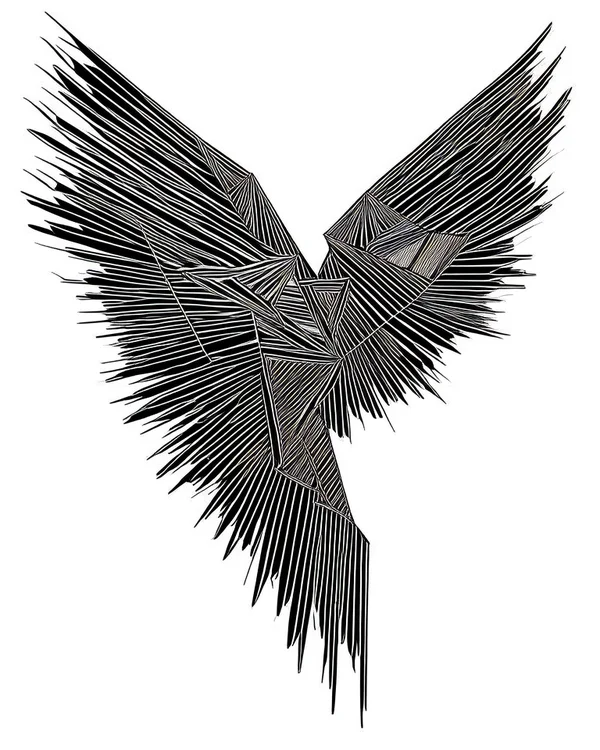
- Glitch effects: Horizontal displacement, chromatic aberration or data-moshing artifacts built into the design. Some artists achieve this with deliberate misalignment of overlapping layers.
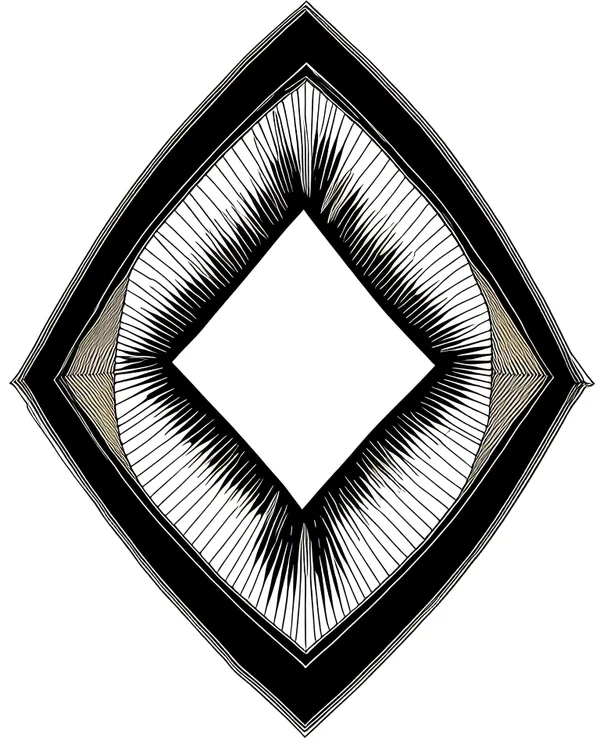
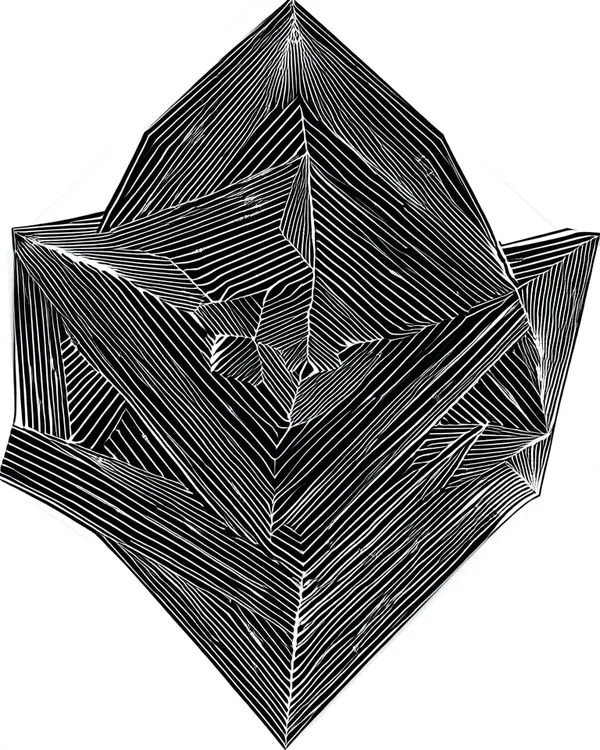
- Sacred geometry meets hardware: Flower of Life, Metatron's Cube or Sri Yantra patterns constructed with the geometric precision of microchip architecture rather than freehand curves.
- Binary and code fragments: Strings of ones and zeros, hexadecimal values or snippets of pseudo-code embedded as decorative text elements within the composition.
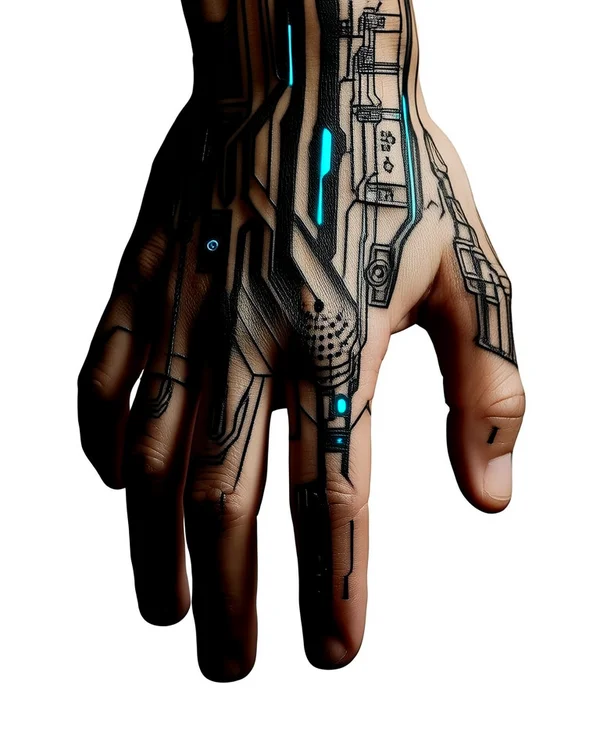
- Monochrome palette: Most cybersigilism work is solid black with skin-break negative space, though some artists add electric blue, neon green or UV-reactive ink accents for the circuit nodes.
Popular Motifs and Design Ideas
Cybersigilism designs range from small, discreet marks to large compositions that wrap around limbs or cover entire panels of the body. Here are some motifs that appear again and again in the style:
- Circuit sigils: A personal symbol or monogram built from circuit-trace lines, often placed on the forearm, upper arm or back of the neck. These work well at medium scale where the branching lines stay readable.
- Corrupted runes: Elder Futhark or custom rune sets drawn with glitch displacement — parts of the glyph are shifted horizontally or overlaid with scan lines. Popular on the wrist, fingers and behind the ear.
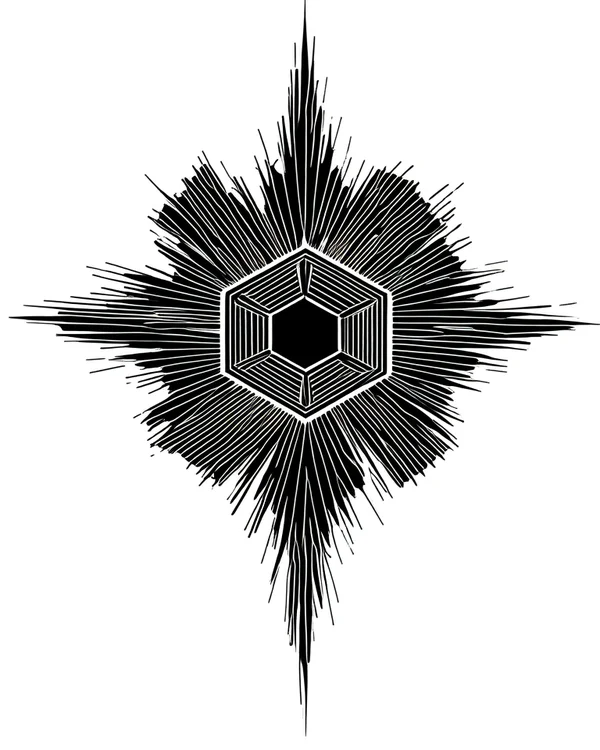
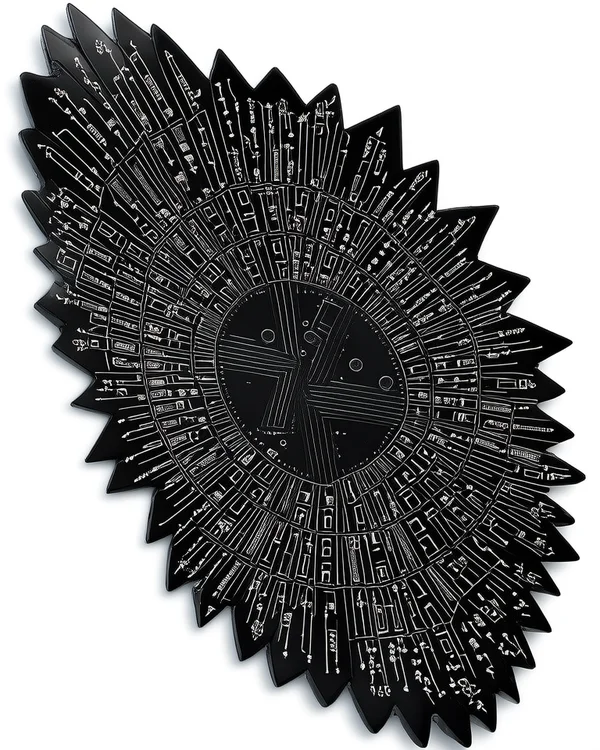
- Binary mandalas: Circular, symmetrical compositions made from binary digits and circuit nodes instead of traditional floral or geometric fills. These look striking on the chest or as a back piece.
- Hardware sacred geometry: Flower of Life or Seed of Life patterns where each circle is constructed from microchip-style traces and solder points. Works well as a shoulder cap or thigh piece.
- Data-stream bands: Horizontal or vertical bands of flowing binary, hexadecimal or pseudo-code that wrap around a limb like a tech version of a tribal armband.
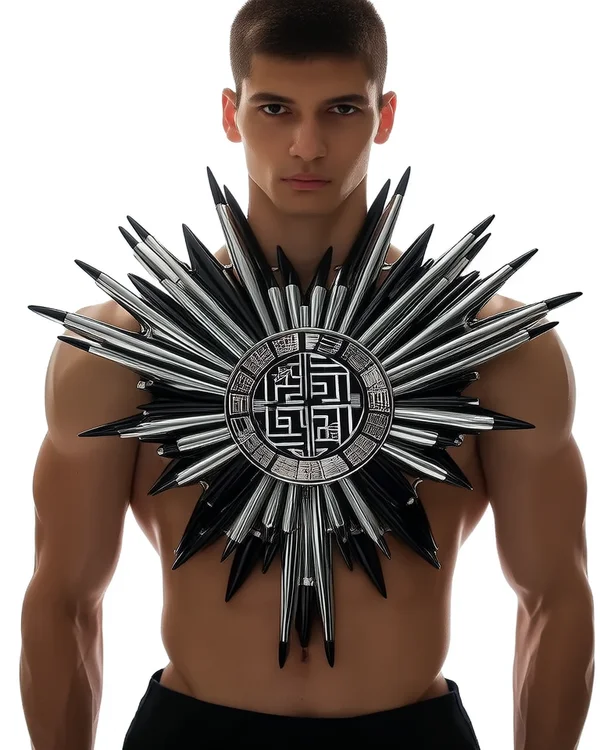
- Cyber-sigil talismans: Amulet-shaped designs combining traditional protective symbols (evil eye, hamsa, pentagram) with circuit-board aesthetics. Often placed on the sternum, inner forearm or calf.
Placement Tips
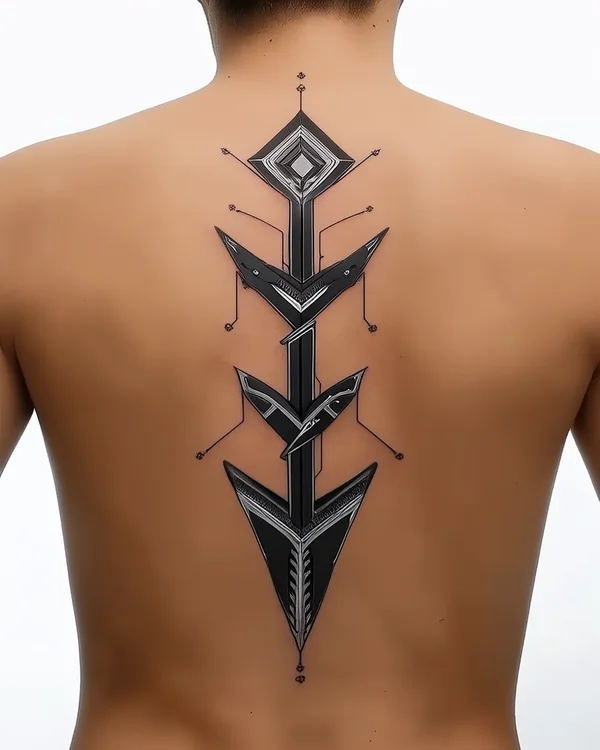
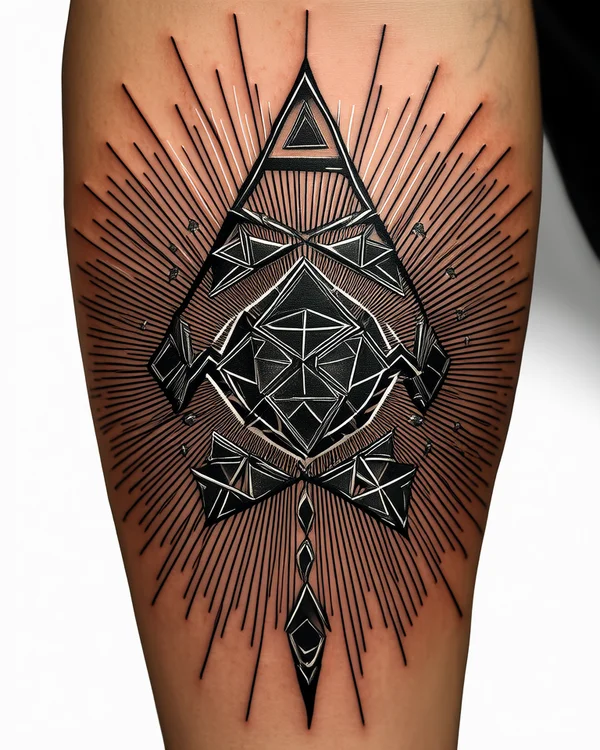
Cybersigilism designs tend to be linear and geometric, so they work best on relatively flat areas of skin where the lines stay true. The outer forearm is the most popular placement — it offers a long, narrow canvas that suits the branching, circuit-like compositions and stays visible for daily appreciation. The upper arm, shoulder blade and calf are also excellent choices for larger pieces.
For smaller motifs like corrupted runes or mini sigils, the wrist, behind the ear, the fingers and the inner bicep are all strong options. Keep in mind that very fine circuit-trace lines on the hands and fingers will blur faster than on other body parts due to constant movement and friction. If you want the glitch details to stay crisp for years, choose a placement with less wear.
The style's monochrome nature means it sits well alongside other blackwork or fine-line tattoos. Many people start with a single cybersigilism piece and build out a tech-occult sleeve over time, connecting individual designs with circuit-trace lines that flow between them.
Aftercare Notes
Because cybersigilism relies on thin, precise lines and small details, aftercare is especially important for keeping the design sharp. Follow your artist's instructions, but in general: keep the tattoo clean and moisturized for the first two weeks, avoid soaking it in water (baths, pools, hot tubs), and do not pick at any scabs that form. Sun exposure is the biggest long-term threat to fine blackwork — apply SPF 30 or higher whenever the tattoo will be exposed to sunlight.
If you chose UV-reactive or neon ink accents, be aware that these pigments can fade faster than standard black ink. Plan on a touch-up session within the first year if you notice the color elements losing intensity. The black linework itself should hold up well as long as the artist used solid technique and the ink was deposited at the correct depth.
Preview Cybersigilism on Your Body
A cybersigilism tattoo reads differently depending on your body shape, skin tone and the size you choose. A design that looks perfectly balanced on a flat sheet of paper may need adjustment to flow with the curves of your forearm or shoulder. That is exactly why we built the InkPreview tattoo simulator — upload your own photo, place any of the 24 designs above at the size and position you are considering, and see how it actually looks on you before you commit.
Gallery — 24 Cybersigilism Reference Designs